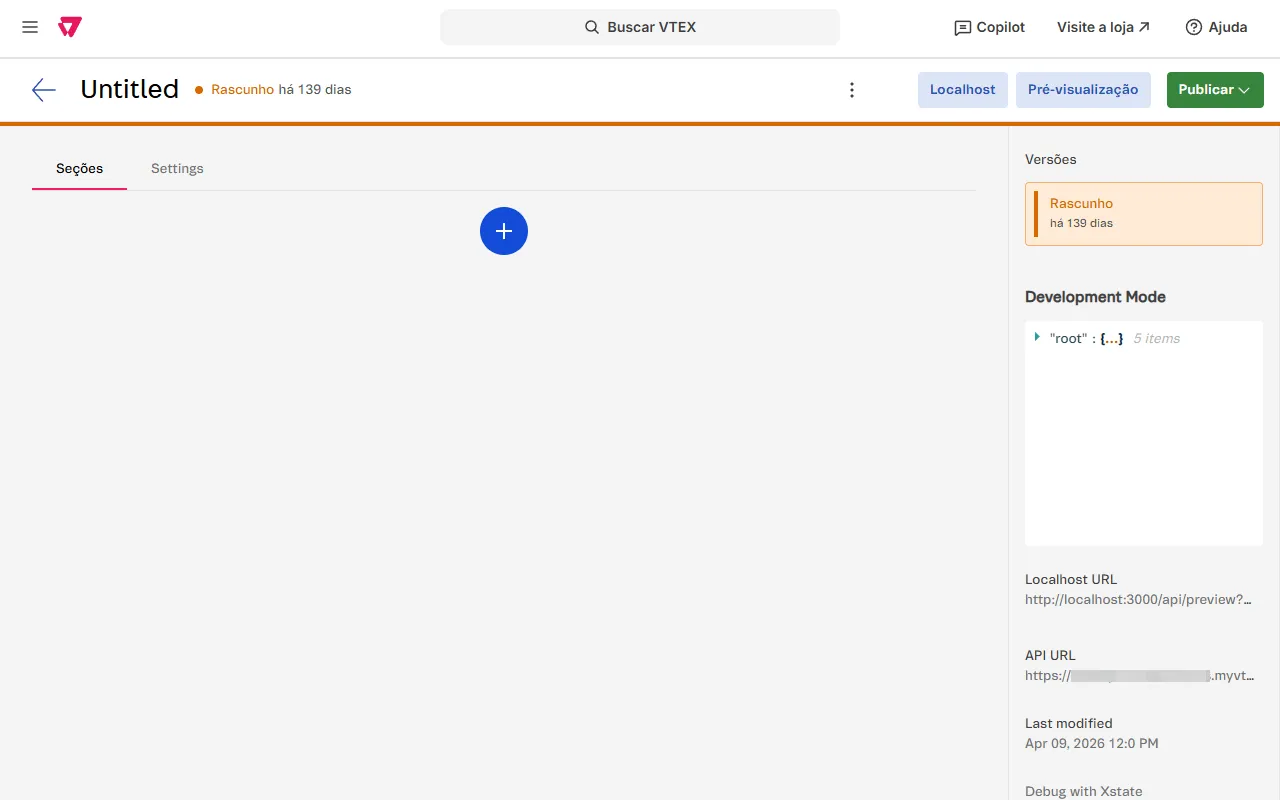
The Preview button of the FastStore CMS — the legacy Headless CMS and Storefront > Content — opens the published store. The extension injects a Localhost button next to it that opens the same URL on your dev server: the whole query preserved, on both CMS versions, and with no cmsDevMode required. Stores on VTEX IO and on the legacy portal preview by workspace and do not use this flow.
02
Fetch runner
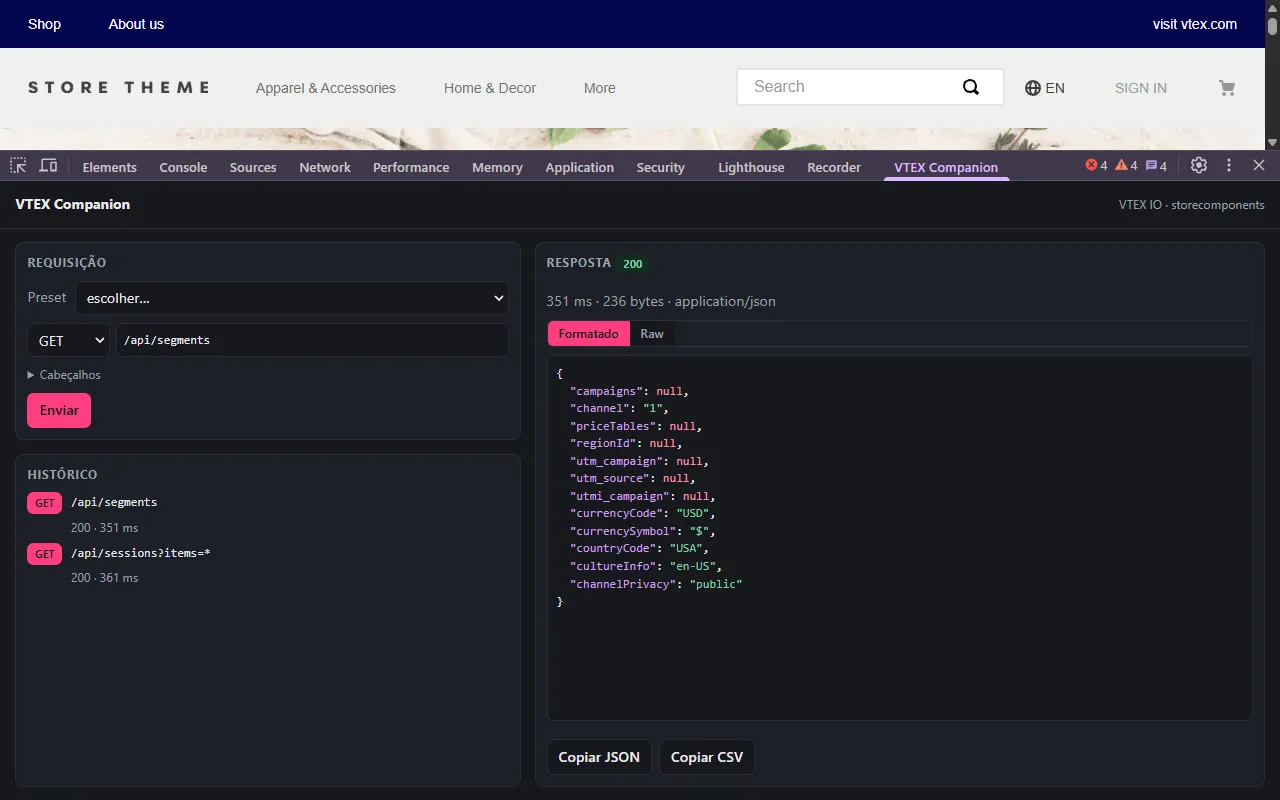
Call the store’s APIs from inside the tab itself, with the session it already has. Presets for Session, Checkout, Catalog, Intelligent Search, OMS and Master Data; the response formatted or raw; session history and copy as JSON or CSV. Any method that changes data asks for confirmation first.
03
Stack, segment and session
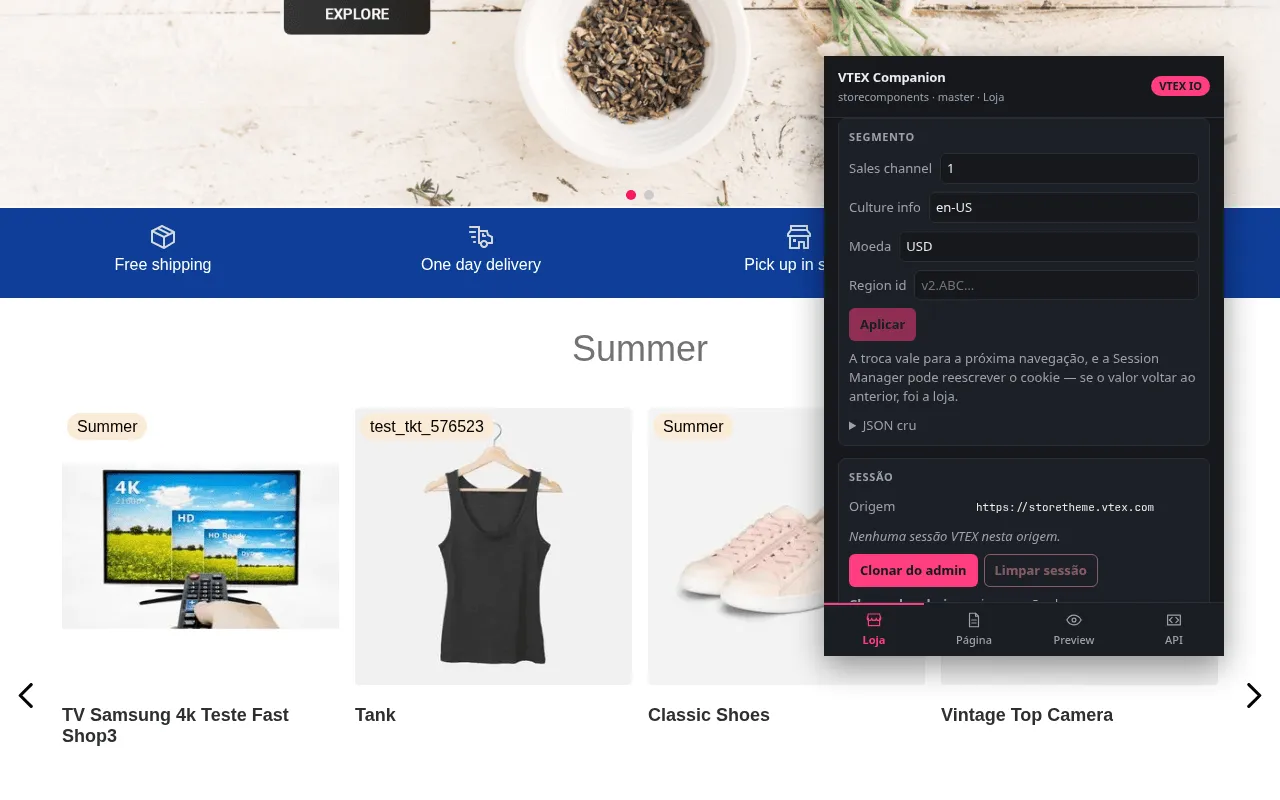
IO, FastStore, legacy CMS Portal or headless — with account, workspace, binding and the signals behind every conclusion. On the same tab, the vtex_segment cookie decoded into editable fields, and the session: whether store and admin logins exist on the origin, and cloning the one from {account}.myvtex.com to the store domain without the token ever touching the clipboard.
04
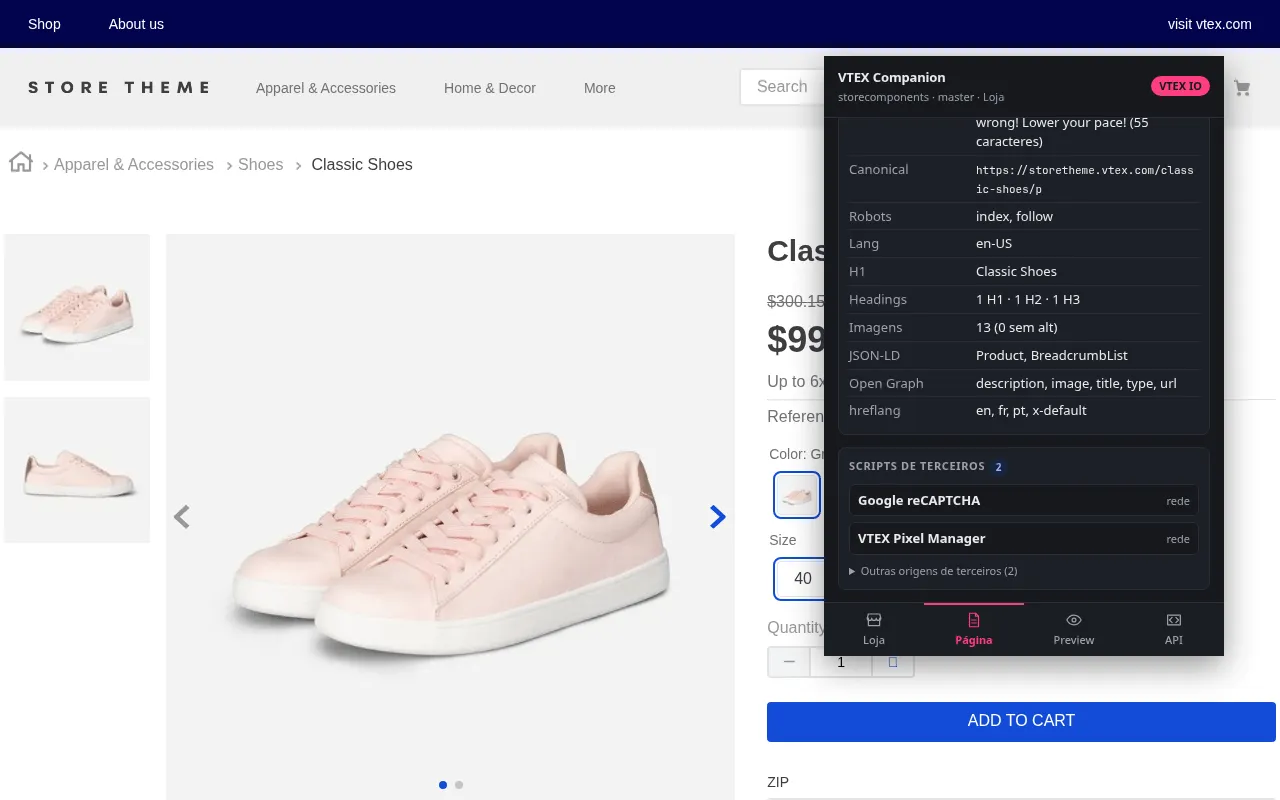
SEO and third-party scripts
Indexing, canonical, hreflang, JSON-LD, headings and images missing alt, with rules per page type — a PDP with no Product, a listing with no ItemList. Alongside it, the vendors loaded on the page, with the account id where there is one: GTM, GA4, Meta, TikTok, Clarity, Criteo and others.
And more
Page catalog
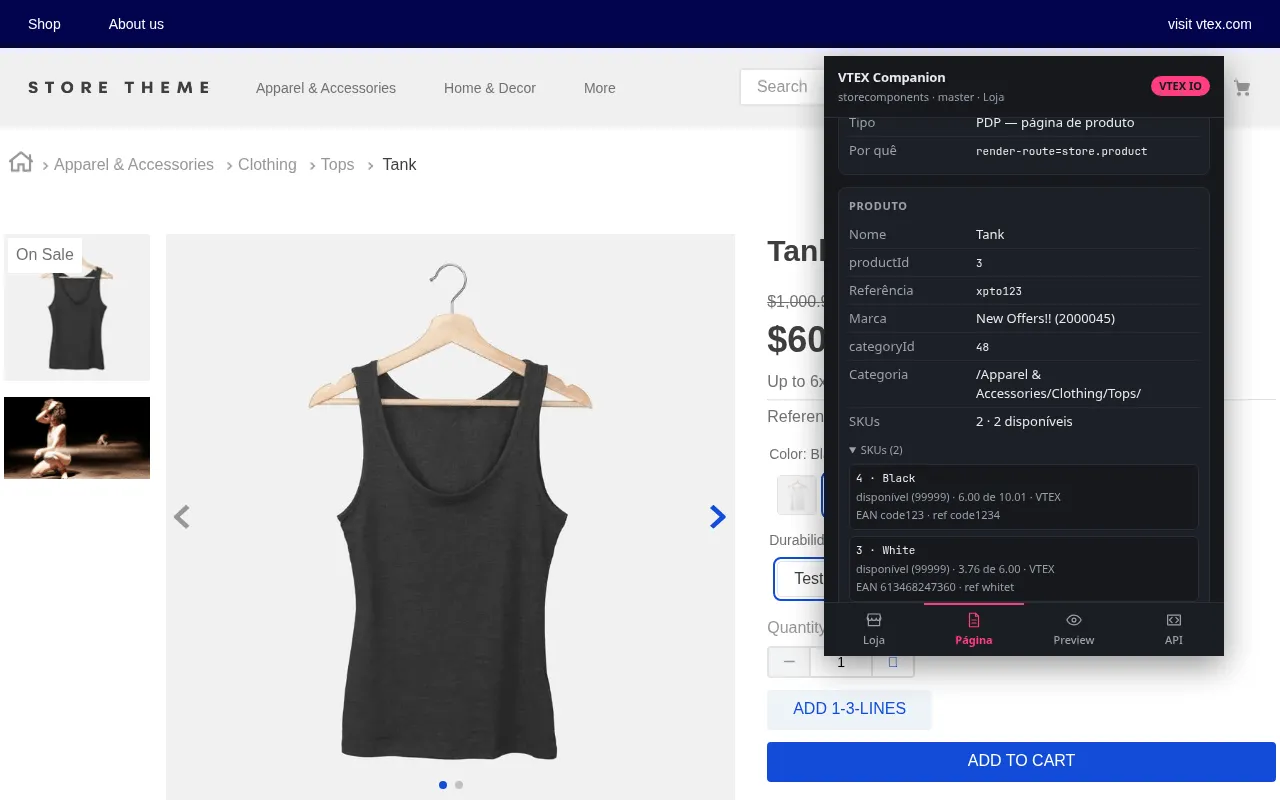
A PDP with the SKU list — EAN, refId, seller, price and availability — and a shortcut into the admin. Listings and search with category, path, term, map and sorting.
Store segment
The vtex_segment cookie decoded: sales channel, culture info, currency and region id as editable fields, plus the whole JSON for priceTables, campaigns and everything else. Saving reloads the tab.
Workspace and URL flags
Opens the same route in another workspace, with the recent ones and a way back to master. Render-runtime flags — __siteEditor, __disableSSR, __disablePixels, binding and sales channel — in one click, keeping the rest of the query.
DevTools panel
The runner also lives in a VTEX tab in DevTools, with the whole window, on top of the popup.
Chrome and Firefox
One source tree, two MV3 builds: service_worker on Chrome, background.scripts on Firefox. The Firefox build also runs on Android, where everything happens in the popup — the browser has no DevTools on the device.
No global content script
Page reading is injected on demand when you open the popup. That is why installing it never asks to “read your data on all websites”.
FAQ
Which browsers does it work on?
Chrome and Chromium-based browsers, and Firefox. The Firefox build also runs on Android, where everything happens in the popup — the browser has no DevTools on the device.
Do I need to be logged into VTEX?
Not to read the page: stack detection, SEO and third-party scripts work on any public VTEX store. API calls use the session the tab already has — if the endpoint needs an admin session, you have to be logged into that account’s admin.
Does the extension send my data anywhere?
No. There is no server: it reads the tab on demand and discards it when the panel closes.
Why doesn’t installing it ask for access to all websites?
There is no global content script — page reading is injected on demand when you open the popup. Fixed access is only *.myvtex.com and localhost; store domains are optional, granted by you site by site.
I found a bug. Where do I report it?
In the repository issues. It is an independent project maintained in spare time, but I read everything.
It collects nothing
There is no server. The extension reads the tab on demand and discards it when the panel closes. Fixed access is only *.myvtex.com and localhost; store domains are optional, granted by you site by site.